Toothbrush, Wipes, or Gel? Finding Dental Home Care Your Cat Will Tolerate
Cats hide dental pain with remarkable skill, making it easy to miss the progression from healthy gums to painful disease. By the time signs become obvious, significant damage has often already occurred. Home dental care creates a defense against that silent progression, but only when the methods used actually address plaque and tartar buildup without creating stress that makes cats resistant to future handling.
Just Cats Clinic in Reston understands that feline dental home care requires strategies designed specifically for cats, not dogs. As an AAHA-accredited, Cat Friendly Practice, we assess each cat’s temperament during preventive exams to recommend realistic home care approaches. Some cats tolerate finger brushes or dental wipes. Others respond better to water additives or dental treats formulated to reduce plaque. Our dentistry services include thorough oral exams that identify early disease, and we help owners understand which home care products deliver results versus which ones make inflated claims. Schedule an appointment to develop a home dental care plan tailored to your cat’s specific needs and tolerance.
Making Sense of Dental Care at Home for Cats
Many cat owners first notice a dental problem through a subtle symptom. A new odor on the breath. A flinch when the mouth is touched. A slight change in eating behavior. These moments often raise an important question: what actually works for dental care at home, and what will a cat realistically tolerate? Will home dental care even help, or just cause stress for everyone involved?
Dental home care does not need to be perfect to be effective. Consistency and the right tools matter far more. At Just Cats Clinic, we view home dental care as a partnership between medicine and daily life. Our goal is to help you choose tools that fit your cat’s behavior, health status, and stress threshold while still making a meaningful impact on oral health. Ask us what we recommend during your next wellness visit.
Why Dental Home Care Matters for Cats
Dental disease in cats begins with plaque, a soft bacterial film that forms on teeth daily. If not disrupted, plaque mineralizes into tartar, triggering inflammation of the gums and deeper structures. Over time, this process leads to periodontal disease, which can cause tooth loss, chronic pain, and infection that affects other organ systems.
Home dental care slows this progression by disrupting plaque before it hardens. While brushing and other tools cannot replace professional dental cleanings under anesthesia, they significantly extend the time between procedures and reduce the severity of disease.
At Just Cats Clinic, dental health is evaluated as part of whole-body wellness. We integrate home care recommendations with professional dentistry, diagnostic imaging, and pain management to support long-term comfort and function. When selecting dental products, we recommend looking for Veterinary Oral Health Council (VOHC) acceptance, which indicates a product has met specific standards for reducing plaque or tartar in controlled testing.
Trusted Products from Our Pharmacy
The products and links included throughout this article are available through Just Cats Clinic’s personal pharmacy. All these products are either VOHC-approved or made by companies with other VOHC-approved products, so you can trust their effectiveness and safety for your cat.
Toothbrushing and Why It Remains the Gold Standard
How Brushing Protects Feline Teeth and Gums
Brushing physically removes plaque from the tooth surface and along the gumline, disrupting bacterial biofilm before it causes inflammation. This mechanical action is what makes brushing more effective than any passive product alone. Daily brushing provides the strongest protection, but even brushing several times per week offers measurable benefit.
Technique matters more than duration. Even brief, gentle contact along the outer surfaces of the teeth can significantly reduce plaque accumulation when performed consistently.
Introducing Brushing Without Creating Stress
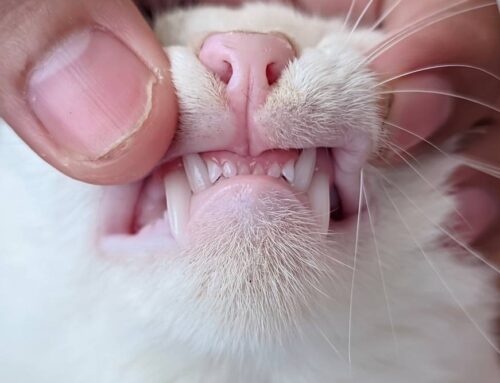
Cats require a slow, methodical approach. Begin by touching the face and lips during calm moments. Progress to lifting the lip briefly to touch the teeth. Once tolerated, introduce a pet-safe toothpaste on a finger, allowing the cat to investigate the taste.
Only after these steps should a finger brush or soft-bristled brush be introduced. Sessions should be brief and positive. The goal is acceptance, not perfection. Techniques drawn from cooperative care techniques help cats maintain a sense of control, which is essential for long-term success.
Choosing the Right Tools for Brushing
A complete starter kit simplifies the introduction process. The C.E.T. Oral Hygiene Kit from our pharmacy includes both finger brushes and angled toothbrushes along with enzymatic toothpaste, giving you options to match your cat’s tolerance level. Starting with a finger brush often feels less invasive to cats while still providing effective plaque removal.
Our team routinely demonstrates brushing techniques during dental visits and preventive exams, adjusting recommendations based on each cat’s response.
Dental Wipes and Gauze as Practical Alternatives
Some cats strongly resist brushes despite careful introduction. In these cases, dental wipes or gauze wrapped around a finger provide a useful alternative. These methods rely on friction to remove surface plaque, particularly from the front teeth and outer surfaces.
Wipes are most effective when used consistently and paired with enzymatic ingredients that support plaque breakdown. While they do not reach beneath the gumline or the back molars as effectively as brushing, they are far preferable to no home care at all.
ProDen DentalCare Dental Wipes from our pharmacy offer a convenient, pre-moistened option that works well for cats who tolerate brief contact but resist brushing motions. The textured surface helps mechanically remove plaque while enzymatic ingredients continue working after application.
For many cats, wipes serve as a long-term solution. For others, they act as a transitional step toward brushing. We help determine which role they should play based on oral exam findings and tolerance.
Enzymatic Gels and Dental Sprays
Dental gels and sprays work by chemically disrupting plaque through enzymatic action. These products are applied along the gumline using a finger, applicator, or spray mechanism and do not require brushing to be effective, although mechanical action improves results.
Vetradent Dental Spray from our pharmacy provides a quick application method for cats that resist direct contact. The spray delivers enzymatic ingredients throughout the mouth with minimal handling, making it particularly useful for sensitive or geriatric cats.
Enzymatic products are most effective when used consistently and combined with other strategies. They support oral health but cannot remove established tartar on their own.

Water Additives and Oral Rinses: What to Expect
Water additives and oral rinses aim to deliver antimicrobial or enzymatic agents throughout the mouth during drinking. Ease of use makes them appealing, but effectiveness varies significantly between products.
Additives should be viewed as supportive tools rather than primary plaque control. They do not remove existing tartar and should not replace brushing or wipes.
Several water additive options are available:
- Vetradent Powder Water Additive and Vetradent Liquid Water Additive offer enzymatic plaque control that mixes easily with drinking water
- CEVA Clenz-A-Dent ProDen PlaqueOff Powder can be added to food or water and works systemically to reduce plaque and tartar formation
- Healthymouth products combine water additives with other dental care solutions designed specifically for cats
Palatability is an important consideration. Any additive that discourages water intake should be discontinued immediately, particularly in cats with kidney disease or urinary concerns.
Dental Treats as Supportive Tools
Dental treats provide another layer of plaque control through mechanical abrasion during chewing. While they should not replace brushing or professional care, they offer additional benefits when chosen carefully and given consistently.
Feline Greenies Dental Treats and Purina Pro Plan Veterinary Diet Dental Bites are formulated with textures and ingredients that help reduce plaque and tartar accumulation. These products work best when given daily as part of a comprehensive dental care routine.
Dental treats should be factored into your cat’s overall caloric intake to prevent weight gain. We can help you determine appropriate portion sizes during wellness visits.
Can Diet Support Dental Health?
Specially formulated dental diets offer continuous plaque and tartar control through mechanical and chemical action during eating. These prescription and therapeutic diets feature kibble designed with specific textures, shapes, and sizes that promote chewing and tooth contact.
The mechanical scrubbing action combined with ingredients that interfere with plaque mineralization can significantly reduce tartar accumulation when fed as the primary diet. Some formulations also incorporate polyphosphates or other agents that help prevent tartar from bonding to tooth surfaces.
Dental diets available through our pharmacy provide ongoing support for cats with existing dental disease or those prone to rapid tartar formation. These diets work best when combined with other home care methods and regular professional cleanings.
Not every cat is a candidate for dental diets. We evaluate factors like age, overall health status, other dietary needs, and chewing behavior before recommending a specific formulation.
What Home Dental Care Cannot Replace
Even the most consistent home routine cannot remove hardened tartar or address disease below the gumline. Comprehensive dental evaluation requires anesthesia to allow thorough scaling, polishing, and diagnostic imaging.
Concerns about anesthesia often lead owners to consider alternatives, but anesthesia-free dental risks include incomplete cleaning, undetected disease, and potential injury. Proper anesthesia allows pain control, full-mouth radiographs, and safe treatment of pathology.
At Just Cats Clinic, every dental procedure includes full-mouth radiographs, careful monitoring, and individualized pain management. Home care and professional dentistry work together to preserve comfort and function.
Creating a Sustainable Routine That Works
The most effective dental routine is one that can be maintained. Pairing care with daily habits, such as evening feeding or quiet bonding time, improves consistency. Progress may be gradual, and setbacks are normal.
Signs that home care is helping include reduced redness at the gumline, less odor, and slower tartar accumulation. Conversely, drooling, pawing at the mouth, or changes in eating behavior signal the need for re-evaluation.
We regularly coach clients through adjustments, helping refine techniques and product choices as cats age or health status changes.
Partnering for Lifelong Feline Dental Health
Dental home care is not a single product or technique. It is a tailored strategy built around your cat’s anatomy, temperament, and medical needs. At Just Cats Clinic, we combine advanced dentistry, diagnostics, and preventive medicine with practical guidance for daily care.
Our AAHA-accredited hospital and Cat Friendly Practice standards ensure that dental recommendations are grounded in evidence, safety, and feline-specific handling. To assess your cat’s current oral health and develop a realistic home care plan, schedule an appointment today.