High blood pressure hides so effectively in senior cats because it rarely causes the symptoms you would expect until it has already damaged the kidneys, eyes, heart, or brain. Cats do not act tired or headachy the way a person with hypertension might, and many affected cats seem perfectly normal at home right up until sudden blindness, a seizure, or a kidney crisis reveals what has been happening quietly for months. The disease is closely linked to other feline conditions, particularly chronic kidney disease and hyperthyroidism, which is why routine screening in older cats catches it before the damage compounds. Caught early, hypertension is manageable with medication and consistent monitoring, and many cats live comfortably for years after diagnosis.
Our Cat Friendly setup at Just Cats Clinic in Reston matters most for a disease like hypertension, because a stressed cat cannot be assessed accurately when their blood pressure is high from fear. Twice-yearly preventive exams and lab work for senior cats let us track kidney values, thyroid levels, and urine concentration over time, which are the same signals that flag hypertension risk long before a cat shows symptoms. If your senior cat is due for screening or you have noticed changes in vision, appetite, or behavior, schedule a visit so we can begin looking.
At a Glance
- Hypertension in cats usually causes no visible signs until it has already harmed the eyes, kidneys, heart, or brain, which is why screening matters more than waiting for symptoms.
- Most feline cases are secondary to another disease, especially chronic kidney disease and hyperthyroidism, so a blood pressure problem is often a window into the cat’s overall health.
- Sudden blindness, disorientation, or seizures can be the first outward clue, and these count as urgent situations that need same-day evaluation.
- Medication is the foundation of treatment, and with consistent dosing and regular rechecks, most cats maintain a good quality of life for years after diagnosis.
What Does Hypertension in Cats Actually Mean?
Hypertension in cats means the pressure inside the arteries stays too high over long stretches of time. Sustained high blood pressure strains the delicate vessels of the eyes, kidneys, heart, and brain, and many cats show no outward change until one of those organs is already damaged.
Think of it less as a single scary number and more as steady, invisible wear that forces the heart to work harder and adds up over months. Cats grow more vulnerable with age, largely because the diseases that drive high pressure become more common in the second half of life. The kidneys and thyroid are especially involved, and both tend to falter in senior cats. That is the frustrating part: the cat who has quietly claimed the sunniest windowsill for a decade can be running dangerously high pressure while looking, to every appearance, completely fine.
It helps to separate the two forms. Primary or idiopathic hypertension, which has no identifiable trigger, is the less common form; secondary hypertension linked to another disease process accounts for the majority of feline cases. That distinction shapes everything that follows, because finding the underlying cause is often the key to controlling the pressure. Our in-house ultrasound and digital imaging let us look at the organs involved and build a fuller picture than a single test could give.
What Underlying Conditions Cause High Blood Pressure in Cats?
Most feline hypertension is secondary, meaning it rides on the back of another illness, and a handful of chronic conditions account for most cases. Chronic kidney disease is the single most common driver, since damaged kidneys lose their ability to regulate fluid balance and pressure together. Rising pressure then injures the kidneys further, which is why the two so often travel as a pair.
The other frequent culprits each raise pressure through their own mechanism:
- Hyperthyroidism: Feline hyperthyroidism accelerates the heart and metabolism, and it ranks among the most common endocrine conditions that push blood pressure upward in senior cats.
- Diabetes: Diabetes mellitus alters how the body regulates blood sugar and blood vessels alike, which is why a diabetic cat warrants blood pressure screening as part of routine management.
- Cardiac disease: Heart disease and high blood pressure frequently reinforce each other, because a strained heart raises pressure and sustained pressure in turn thickens and tires the heart muscle.
Because these conditions overlap so much, we treat blood pressure as one thread in a larger fabric rather than a standalone finding. When a senior cat already carries a diagnosis of kidney disease, thyroid disease, or diabetes, checking pressure is simply part of managing that illness well. Comprehensive senior evaluations let us catch these connections early, when we still have room to intervene.
What Are the Signs of High Blood Pressure in a Cat?
The signs of hypertension in cats are often subtle or entirely absent, which is precisely what makes the disease dangerous, though when signs do appear they tend to be dramatic and sudden. Many cats give no warning at all until organ damage has advanced. The changes families do notice usually involve the eyes, the nervous system, or shifts in ordinary daily habits.
Vision is frequently the first system to show trouble. Sudden vision changes such as dilated pupils, disorientation, or a cat that begins bumping into furniture can be the first outward clue that blood pressure has climbed to a damaging level. A cat who suddenly cannot find the food bowl, hesitates at the top of the stairs, or stares with wide black pupils in a bright room deserves attention right away.
Beyond the eyes, watch for neurological and behavioral shifts: disorientation, circling, unusual vocalizing, wobbliness, or in serious cases a seizure. More subtle changes can creep in too, such as reduced appetite, increased thirst, or a general drop in the cat’s usual energy and grooming. None of these is proof of hypertension on its own, since they overlap with many senior conditions, but together they are a reason to have pressure checked.
If your cat loses vision abruptly or shows neurological signs, urgent care should not wait, because prompt treatment sometimes saves sight. Just Cats Clinic offers urgent care in Reston weekday evenings until 10pm, and until 6pm on weekends.
How Is High Blood Pressure Diagnosed in Cats?
Diagnosing hypertension relies on measuring pressure directly, usually with a small inflatable cuff on a leg or the tail. Interpreting blood pressure readings in a cat depends on multiple calm measurements over time, since a single stress-related spike can mimic true hypertension if only one number is taken.
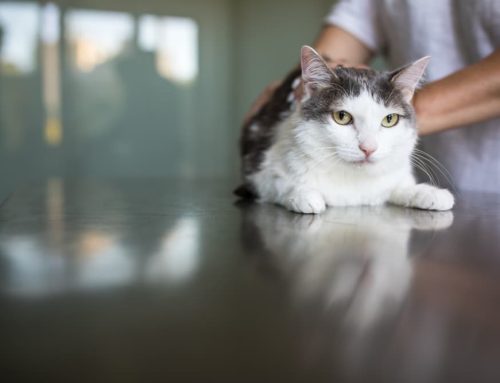
This is where a low-stress setting genuinely changes the result. A cat who arrives frightened, panting, and rigid on the table will read higher than that same cat resting quietly, so the environment is not a nicety here, it is part of the accuracy. Our commitment to a low-stress, cat-friendly exam environment means we take several readings after the cat has settled, average them thoughtfully, and repeat over subsequent visits when needed. Screening is generally recommended for all cats from about seven years of age onward, and earlier for any cat with a known risk factor like kidney or thyroid disease.
What Tests Find the Cause Behind the High Pressure?
Once elevated pressure is confirmed, the next job is finding what is driving it, and that means a broader diagnostic workup rather than blood pressure alone. Because most feline hypertension is secondary, the underlying disease is usually hiding in the bloodwork, urine, or thyroid panel. Pinpointing the cause guides the whole treatment plan and often improves the odds of controlling the pressure.
A typical workup includes:
- Bloodwork: A CBC and chemistry panel assess kidney values, electrolytes, blood sugar, and organ function that could point to a root cause.
- Urinalysis: Checking urine concentration and protein loss reveals how the kidneys are filtering and whether damage is already underway.
- Thyroid testing: Measuring thyroid hormone identifies hyperthyroidism, one of the most common and most treatable drivers of feline hypertension.
- Imaging: Ultrasound and x-ray give us a closer look at the size, structure, and shape of internal organs when more information is needed.
- Serial monitoring: Repeating key values across visits shows whether a condition is stable, improving, or progressing over time.
Having on-site imaging, bloodwork, urinalysis, and thyroid testing means we can run these evaluations and coordinate the picture without adding trips or waiting on outside timelines. The goal is a plan built for the individual cat, because a hypertensive cat with kidney disease needs a different approach than one with an overactive thyroid.
How Is Feline Hypertension Treated?
Treatment aims to bring blood pressure down into a safe range and protect the target organs from further damage, and for most cats medication is the cornerstone. Amlodipine, a calcium channel blocker, is the most commonly prescribed drug for feline hypertension. It relaxes the blood vessels so pressure eases and the strain on the eyes, kidneys, heart, and brain lets up.
Every cat responds a little differently, so dosing is not fixed at the start. We often begin at a standard dose and then adjust based on recheck readings, sometimes raising it or adding a second medication if the pressure remains stubborn. When kidney disease is part of the picture, additional medications that reduce protein loss in the urine may join the plan. This is genuinely a partnership: consistent daily dosing at home, honest reporting of any pills that get missed, and close communication with us are what keep the pressure controlled between visits. Because response varies so much from one cat to the next, we build individualized treatment plans rather than applying a single formula, and we adjust as the recheck numbers tell us more.
Can Diet and Lifestyle Help Manage a Cat’s Blood Pressure?
Diet and lifestyle changes support medical treatment rather than replace it, but they meaningfully strengthen the overall plan. Therapeutic diets, particularly the renal diets designed for cats with kidney disease, ease the workload on the organs most affected by hypertension and complement the medication doing the heavy lifting. Nutrition is a supporting player here, and a valuable one.
Body condition matters too. Maintaining a healthy body weight eases cardiovascular strain and supports the medical management of hypertension, and gradual, monitored change is safest for senior cats who cannot afford to lose weight too quickly. Rapid weight loss in an older cat can signal or trigger other problems, so any weight plan should be slow and supervised.
Stress reduction rounds out the picture. A calmer cat generally means steadier pressure and more reliable readings. Reducing environmental stress through enrichment, hiding spots, and a predictable daily routine helps keep a cat calmer, which supports both accurate readings and steadier day-to-day management. Simple additions like a tall perch by the window, puzzle feeders, and consistent feeding times do real work for a senior cat’s overall stability.
What Does Long-Term Monitoring Look Like?
Long-term management centers on regular rechecks that confirm the medication is holding pressure in a safe range and catch any drift before it causes harm. After a new diagnosis or dose change, we usually recheck within a few weeks, then space visits out once pressure is stable, though the exact rhythm depends on the cat and any underlying disease.
This is a lifelong commitment, but a manageable one. At home, families are our eyes between visits. Watch for the same signals that flag trouble: changes in vision, appetite, thirst, energy, or behavior, and any sudden neurological signs. A cat who starts bumping into things, stops jumping to a favorite spot, or seems newly confused warrants a call, not a wait-and-see. Regular recheck visits and lab monitoring let us track kidney values and pressure together over time and fine-tune the plan as the cat ages. Here is the reassuring part: most cats respond well to treatment and go on living comfortable, contented lives for years, laundry-basket naps and windowsill vigils fully intact.
| Monitoring focus | What we track | Why it matters |
| Blood pressure | Multiple calm readings per visit | Confirms the medication is holding pressure in range |
| Kidney values | Bloodwork and urine over time | Kidney disease and hypertension worsen each other |
| Vision and eyes | Signs of retinal or eye changes | The eyes are often the first organ damaged |
| At-home signs | Appetite, thirst, energy, behavior | Early shifts prompt a recheck before a crisis |
When Is High Blood Pressure an Emergency in Cats?
Uncontrolled hypertension becomes an emergency when it causes sudden organ damage, and the most common crisis involves the eyes, followed by the brain, kidneys, and heart. When pressure climbs unchecked, the damage can arrive fast and dramatically, and recognizing these moments is what separates a preventable loss from a preserved one.
The eye is often the first casualty. One of the most serious consequences of uncontrolled pressure is retinal detachment and bleeding, where sight can sometimes be preserved if the cat is treated within hours rather than days. That timeline is the whole point: a cat who has suddenly gone blind needs emergency care immediately, because the window to save vision is measured in hours.
The damage is not limited to the eyes. Beyond the eyes, prolonged pressure produces cardiac strain as the heart muscle thickens to keep pace, alongside kidney injury and the risk of neurological events. Seizures, sudden disorientation, collapse, or abrupt vision loss all count as emergencies. If your cat shows any of these, reach us right away during our regular hours, and for anything happening overnight when we are closed, contact the nearest veterinary emergency hospital without delay. Prompt intervention can sometimes stabilize a cat whose pressure has spiked into dangerous territory.

Frequently Asked Questions About Hypertension in Cats
Is high blood pressure in cats reversible?
It depends on the cause. When hypertension is secondary to a treatable condition like hyperthyroidism, controlling that underlying disease can sometimes lower the pressure substantially, occasionally to the point where blood pressure medication is no longer needed. In many cats, though, especially those with chronic kidney disease, hypertension becomes a lifelong condition managed with daily medication and regular rechecks rather than something we cure outright. Either way, the pressure is controllable, and control is what protects the organs.
How often does my senior cat need blood pressure checks?
For most cats over about seven years of age, we recommend blood pressure screening at least once to twice a year as part of a senior wellness exam. Cats already diagnosed with kidney disease, hyperthyroidism, or diabetes need checks more often, because they sit at higher risk. Once a cat is on treatment, rechecks are scheduled more frequently at first, then spaced out as the pressure stabilizes.
Can stress alone cause high blood pressure readings in my cat?
Stress can temporarily raise a cat’s blood pressure during a visit, a phenomenon sometimes called situational or white-coat hypertension, which is exactly why a diagnosis is never based on one reading in a frightened cat. We take several measurements after the cat has settled and repeat over multiple visits when the picture is unclear. A calm, cat-focused environment reduces this stress effect considerably, giving us numbers we can actually trust before committing a cat to lifelong treatment.
Caring for Your Senior Cat’s Blood Pressure, Together
Hypertension does its damage quietly, but it does not have to go undetected. Routine screening, early diagnosis, and consistent treatment turn a silent threat into a manageable chronic condition. The strongest outcomes come from something simple: making pressure checks part of ordinary senior care.
Twice-yearly wellness visits, honest communication about what you notice at home, and steady daily medication are what keep this disease from taking a cat’s sight or shortening their years. If your senior cat is due for a wellness exam or you have concerns about vision, appetite, or behavior, we would be glad to help. Just Cats Clinic offers comprehensive senior wellness care built around the twice-yearly screening that catches hypertension early. When you are ready to get a clear picture of your cat’s health, schedule a blood pressure screening at your convenience.